 NEWS
NEWS Defense-Focused Capitol Meridian Closes $1.9 Billion Sophomore Fund
By Chris Cumming
WSJ Pro
Founded by Carlyle Group veterans, the firm targets a sector fueled by mounting geopolitical tensions
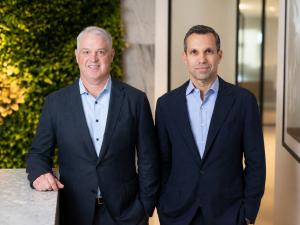
Capitol Meridian Partners, a firm founded by former Carlyle Group dealmakers, raised $1.9 billion for its second fund to deploy in the defense sector, which has seen a surge of investor interest amid rising geopolitical conflict.
The fund
The vehicle, Capitol Meridian Fund II, closed above its $1.2 billion goal and hit its upper fundraising limit, the Washington, D.C.-based firm announced Monday. Over 60 limited partners contributed $1.8 billion and the firm and its affiliates chipped in about $100 million.
Capitol Meridian closed its first fund at $900 million just over two years ago, with LPs committing an additional $300 million for co-investments.
The recent burst of investor interest in defense helped Capitol Meridian raise the new fund in about five months, said Adam Palmer, a firm founding partner.
Investors have become “much more focused on the opportunity for private capital to meet the needs of the present geopolitical environment,” Palmer said. These needs include mounting military spending amid the conflicts in Ukraine and the Middle East and the strategic rivalry between the U.S. and China.
This investor demand helped the firm overcome a difficult private-equity fundraising environment, said Brooke Coburn, the firm’s other co-founder. Fundraising by U.S. firms through midyear was on pace to come in just below last year’s total, which would make three consecutive years of declines, according to data-tracking firm PitchBook.
Because of the sector in which it invests, Capitol Meridian has to manage its investor base to avoid running afoul of restrictions on foreign investors in businesses touching national security, said Coburn.
Most LPs are domestic and the remainder are from the so-called Five Eyes countries—Australia, Canada, New Zealand and the U.K.—that are part of an intelligence-sharing alliance with the U.S.
The strategy
Coburn and Palmer formed Capitol Meridian after working together for about 25 years at Carlyle Group, where they also invested in the defense sector.
Carlyle gradually outgrew the midmarket, where most of the interesting defense investments lie, and in 2021 they founded Capitol Meridian to target these deals, Coburn said. Five of the firm’s six senior leaders have a Carlyle pedigree.
Along with national security, Capitol Meridian also invests in commercial-aviation and government-services businesses. It writes equity checks of $50 million to $250 million in companies with $5 million to $75 million in earnings before interest, taxes, depreciation and amortization, its website says.
Capitol Meridian has acquired nine portfolio companies and has its 10th under contract. Its deals include LMI, which provides management, logistics and other services to over 60 federal agencies, and Clarity, which provides data and analytics software to the U.S. defense sector.
The context
Defense has been a hot sector for private equity for several years because of ongoing geopolitical conflict.
Private-equity firms invested $10.2 billion in U.S. aerospace and defense companies last year, more than double the 2024 sum, according to PitchBook data. So far this year, investment is on track to match or surpass last year’s figure.
This spending “is driven by a shift back to a world with multiple superpowers,” in which the U.S. no longer enjoys unchallenged military dominance as in the period following the Cold War, said Coburn.
In addition, the Trump administration is trying to shake up military procurement to produce armaments more quickly and to involve cutting-edge companies that haven’t traditionally been part of the military supply chain, Coburn said. That creates opportunities for specialist investors such as private-equity firms, he added.
“There is a massive market opportunity when you consider all the retooling that needs to occur,” he said, adding that because of budgetary constraints and political dysfunction in the U.S., there is a need for private investors to help facilitate the buildup.
Write to Chris Cumming at chris.cumming@wsj.com